India (English)
 Middle East and Africa (English)
 South Africa (English)
 Australia (English)
 Japan (日本語)
 South East Asia (English)
 Singapore (English)
 Europe (English)
 France (French)
 Germany (German)
 Hungary (Hungarian)
 Italy (Italian)
 Poland (Polish)
 Portugal (Portuguese)
 Russia (Russian)
 Spain (Español)
 The Netherlands (Dutch)
 Turkey (Turkish)
 United Kingdom (English)
 Argentina (Español)
 Brazil (Portuguese)
 Colombia (Español)
 Latin America (Español)
 México (Español)
 Chile (Español)
 Peru (Español)
 Canada (English)




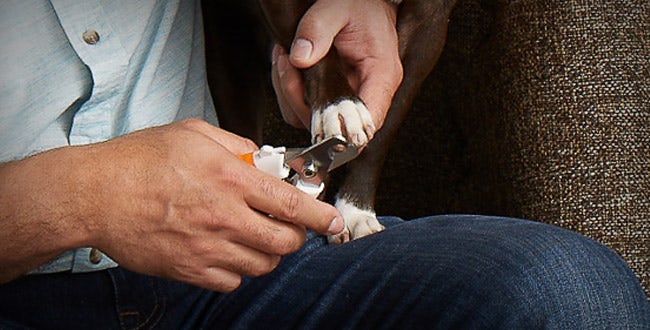
Trimming Your Dog's Nails
Perhaps no other home grooming activity is dreaded more by both owner and pet than cutting a dog’s nails. The task seems simple enough, particularly with the wide array of nail clippers now available, but the procedure can go terribly wrong with one misplaced snip, leaving a dog skittish and reluctant to ever allow you near his feet again. If you mistakenly cut into the quick – or vein and nerve that runs into every nail – a bloody mess could happen that damages carpets, furniture and, most importantly, your dog’s much-needed trust in your home grooming capabilities.
Don’t fret. Even experienced and cautious home groomers have accidentally cut the quick and faced dog nail bleeding. It’s easy to mistakenly cut a dog’s nails too short, particularly if the nails are black or dark in color. Dogs with white or light nails often have a visible quick, making it quite obvious where to avoid clipping. It’s not so simple when you can’t see it.
When you hear your dog’s nail click-clacking as he walks across the floor or hard surface, it’s usually a sure sign that he’s ready to have them clipped. The general rule of thumb is to clip where the nail makes a defined curve down towards the floor. Don’t cut too far beyond that or you could snip the quick. Keep in mind that the longer you allow the nails to grow, the longer the quick may grow, as well.
Dog Nail Trimming Step by Step
-
Wait until your dog is relaxed and calm. A walk before the session will help.
-
Spread dog’s feet to inspect for dirt and debris
-
Hold your dog in place by putting your arms and upper body over him while you clip nails. While clipping front nails, hold your forearm over the dog’s neck to prevent him from lifting his head. If your dog remains anxious or jumpy, try laying him on his side and gently holding him down.
-
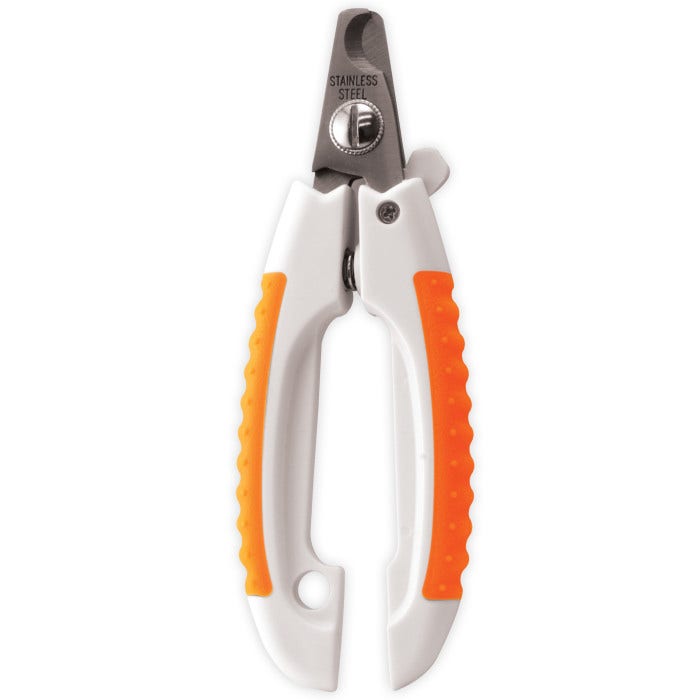
Using sharp clippers, cut off the tip of each nail at a slight angle, just before the point where it begins to curl
-
Take care to avoid the quick , which is the vein that runs into the nail. If you accidentally cut into the quick, causing bleeding, apply some styptic powder to stop bleeding.
-
After nails have been cut, use an emery board or file to smooth out edges
How to Stop Your Dog's Nail Bleeding
What do you do you do if you have a mishap by cutting too far, causing pain and dog nail bleeding? The best thing is to be prepared in advance and have emergency supplies within reach. You will be able to quickly stop the bleeding, relieve the pain, save your carpets from stains and greatly lessen the chance of a nail infection.
The easiest and most effective way to stop dog nail bleeding is with styptic powder or a styptic pencil, which can be purchased at most major pet stores and pharmacies. Be cautioned, however, that styptic powder will provide an initial sting, so be prepared to hold onto the dog firmly while applying. Several home remedies also work, depending on the severity of the bleeding. A mix of cornstarch and baking soda often works well (or, simply, cornstarch alone), while rubbing a clean bar of scent-free soap or a wet tea bag on the nail at the spot of lesser bleeding can also be effective. No home remedy, however, will be as instantly effective as a styptic powder. Also keep a clean cloth, paper towels and ice nearby.
If you accidentally cut into the quick, immediately compress the wound for at least two minutes with a clean cloth or paper towel. If the bleeding is minor, try rubbing a bar of clean, scent-free soap over it. If the bleeding is steady, wrapping ice within the compressed cloth or paper towel will help lessen the blood flow. Next cup your hand and pour some styptic powder or cornstarch (with or without baking soda) into the palm. Gently dip the dog’s bleeding nail into the powder, repeating if the bleeding doesn’t come to an immediate stop. Don’t wipe away the blood before dipping because it will aid coagulation. Once bleeding does cease, continue to compress the wound with a paper towel or cloth, being cautious not to squeeze the paw. Try to keep the dog off his feet for at least 30 minutes.
Once you are sure that the dog nail bleeding has been stopped, wash the affected nail with lukewarm water and bandage to prevent licking and infection. If bleeding cannot be controlled after 20 – 30 minutes, proper clotting is not taking place and a veterinarian should be consulted immediately. Also consult a vet if the dog’s toe later becomes red, swollen or does not appear to be improving after a few days.
Please visit the pet grooming section for additional information on dog care tips and products for grooming, clipping, trimming, and bathing your pet.